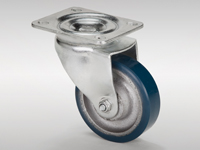
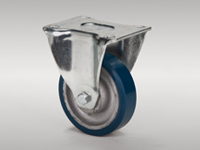
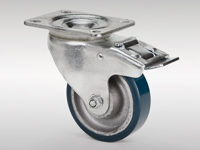
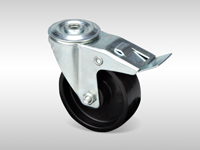
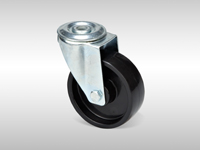
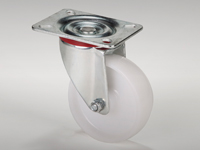
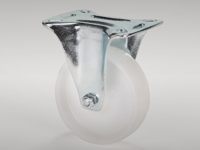
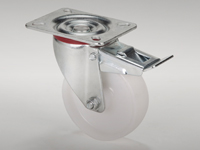
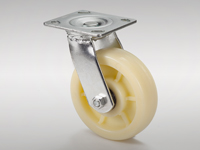
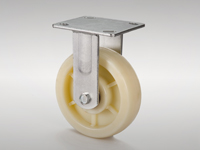
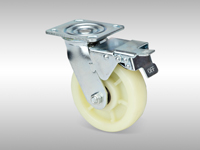
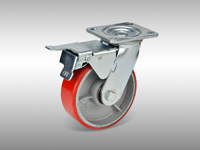
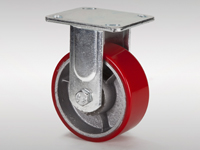
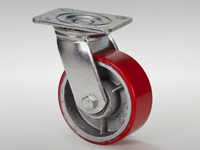
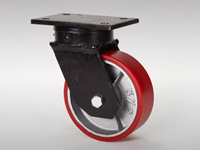
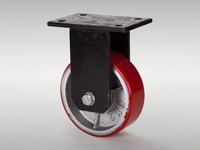
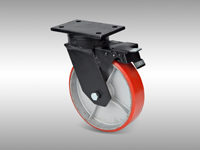
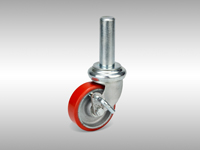
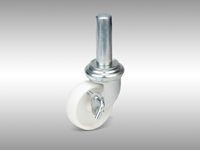
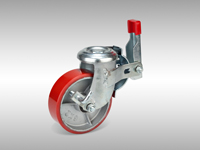
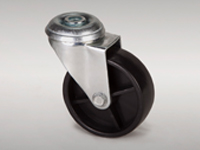
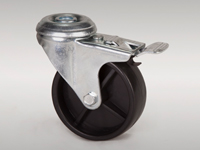
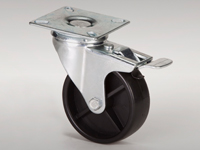
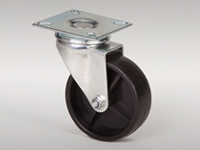
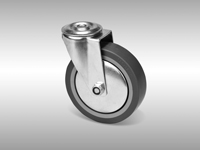
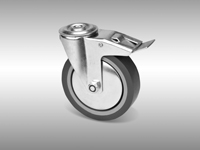
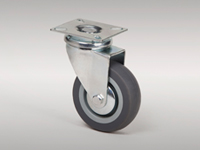
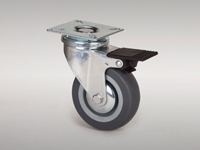
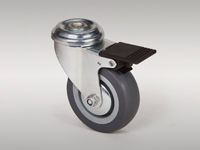
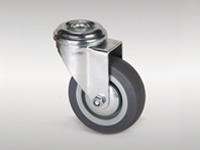
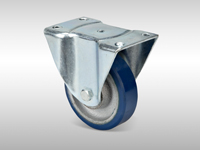
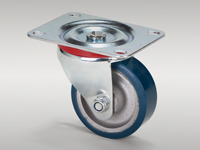
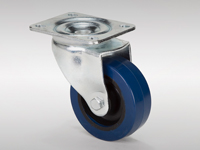
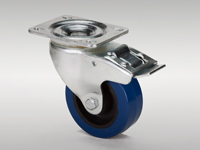
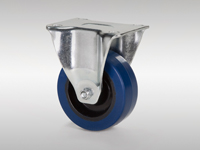
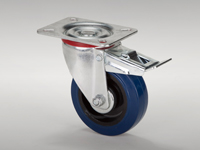
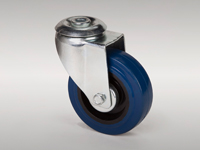
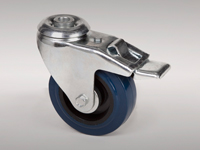
Lynnco Castor Range
At Lynnco , we specialise in supplying an extensive range of castors to meet every requirement.
Whether you need castors for light or heavy duty , industrial or domestic applications we have the product for you.
The difference between Castors and Wheels
A wheel is a round object that rolls.
A wheel rotates on an axle or shaft that passes through the center of the wheel.
A wheel can be solid or spoked.
Wheels made of just one material include solid all polyurethane wheels, steel wheels, V-groove wheels, hard rubber wheels, polyolefin wheels, phenolic wheels, nylon wheels and high temperature wheels.
Wheels that are made essentially of just one material are almost always solid rather than spoked design.
To start with, one component of a castor is a wheel.
Once a wheel is installed in a frame it becomes part of a castor.
The frame is often called a castor bracket, rig or fork.
All of these words are used to refer to the frame which houses or holds the wheel.
The major components of a castor are the wheel and the frame in which it is held.
A castor frame can be either a swivel or a rigid frame.
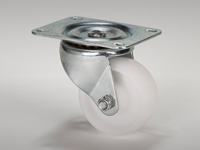
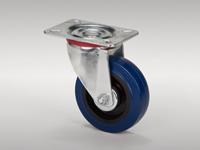
If the frame is a swivel type, then with a wheel installed, it is called a "swivel castor".
A swivel castor is capable of rotating 360°.
A chair castor or a castor on the bottom of a furniture mover's dolly, are examples of a swivel castor that most people are familiar with.
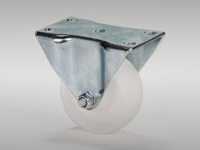
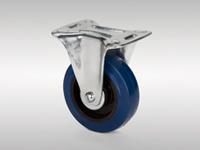
If the castor frame is rigid, then with a wheel installed, it is called a "rigid castor".
A rigid castor is primarily utilized for straight line travel, meaning rolling forward or backward.
In most instances, both a swivel castor and a rigid caster have two "legs".
One leg is on each side of the wheel that is installed in the castor frame.
The wheel is held in place between the legs of the castor frame by a bolt or axle.
Above the legs on a swivel castor is the swivel bearing, which allows a swivel caster to rotate or turn 360°.
Above the legs on a rigid castor there is no swivel bearing because a rigid castor is designed only to go forward or backward.
A wheel held between the legs of a castor frame is the lowest part of a castor because its function is to roll on a floor surface.
The top of a castor is used to attach the caster to the equipment.
There are many ways to attach a castor to a piece of equipment.
The most common means is a mounting plate, often called the top plate.
The mounting plate on a swivel castor is connected to the swivel bearing and to the legs below the swivel bearing.
On rigid castors the mounting plate is connected directly to the legs, forming a "U" shaped frame to hold the wheel.
Most mounting plates on castors contain four holes used to bolt the caster on.
Sometimes castors are attached by welding the mounting plate of the castor to the equipment.
Castors - Effective Productivity for Multiple Applications
With these products being extensively used in manufacturing and other industrial environments to create effective continuous movement of materials , thereby reducing the handling time.
Using professionally manufactured castors reduces the risks associated with handling potentially unsafe materials as well as allowing for easier movement of difficult products , components or materials.
As a highly versatile and flexible component , castors provide the business owner with high levels of recycling especially if and when manufacturing or production locations may change.
One of the most important aspects of the use of castors is that they provide a simple and risk free solution for the transportation of high value components or materials between production or manufacturing positions with minimal delay.
They remove the requirement of physical contact and thus reduce the risk of loss or damage .
Contact us at Lynnco Castors for all your requirements and advice about which casters will be the best for you.